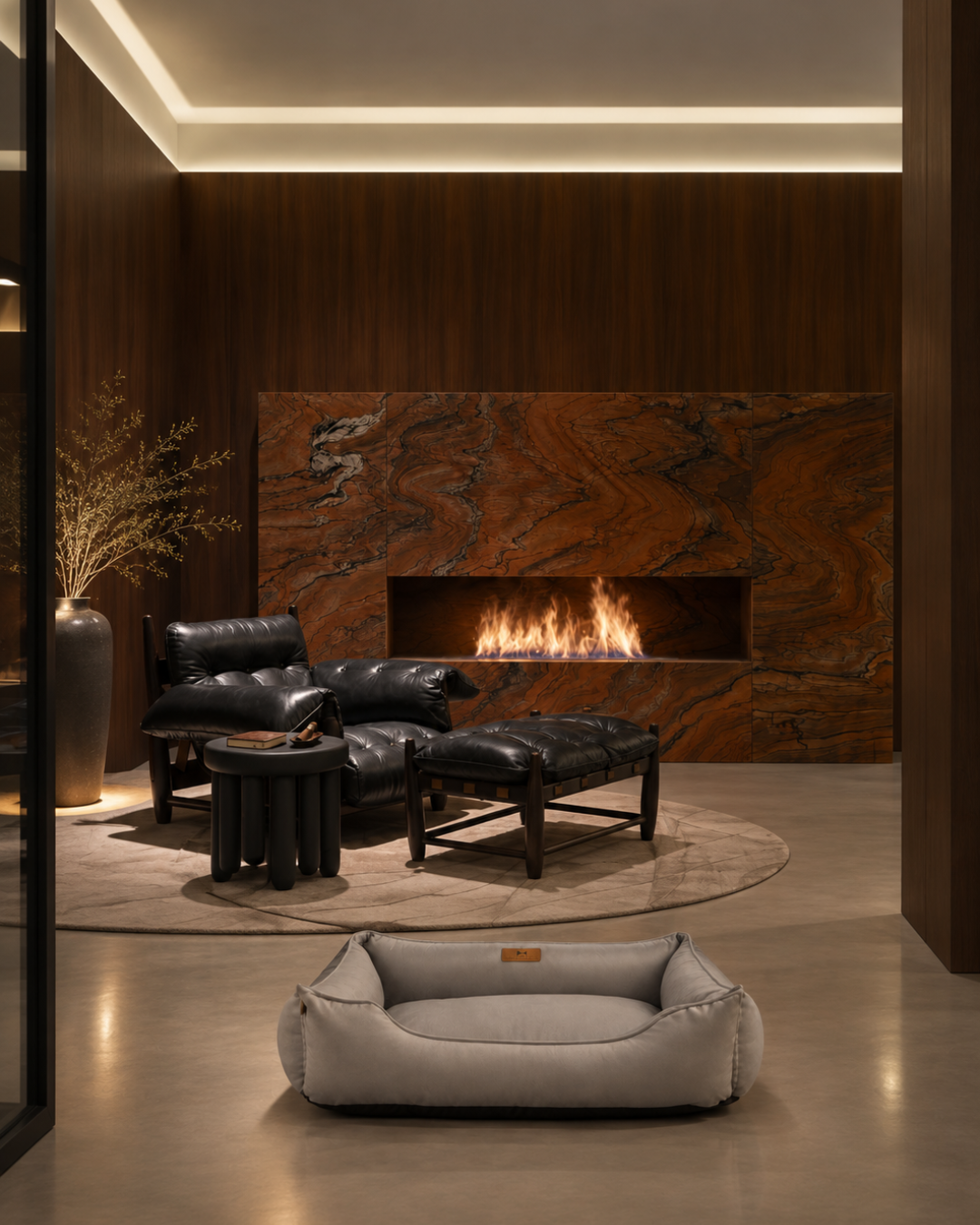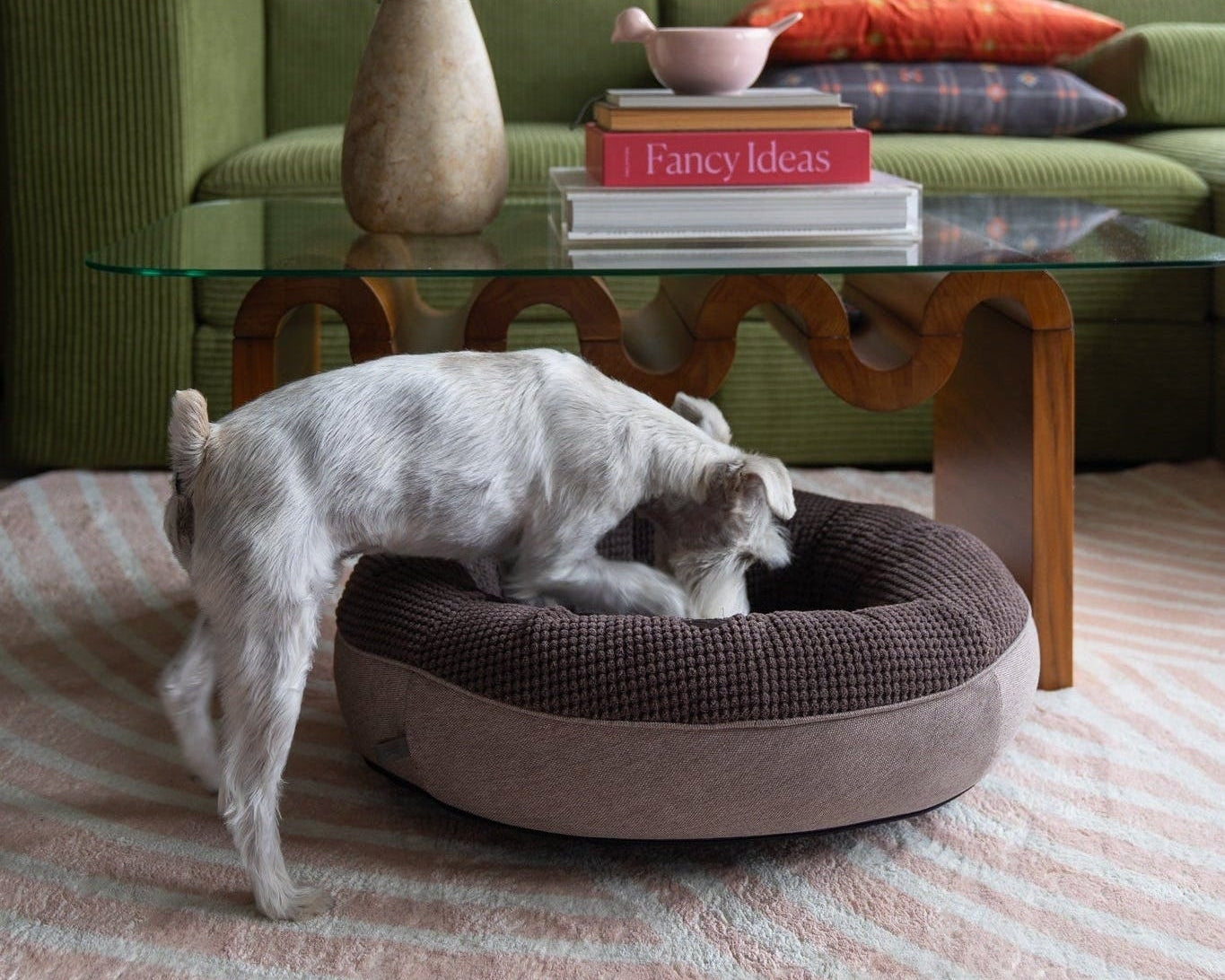
Why do dogs naturally curl up when they sleep?
In the wild, dogs often sleep curled tightly into a ball. This instinctive behavior helps retain body heat and protect vital organs.
The circular shape of a donut bed supports this natural posture, allowing the dog to rest without adapting to unnatural positions. As experts note, “curling up is an instinctual behavior that provides warmth and security,” similar to resting close to pack members.
How does shape reduce anxiety: the “hug effect” of donut beds?
Donut beds with raised edges create a hug-like or cave-like environment that helps reduce stress.
Research shows that calming beds with soft bolsters help dogs feel safer and more protected. By allowing the dog to lean against the edges, the bed creates a sense of control and stability.
This is especially beneficial for dogs with anxiety or those adjusting to changes in their environment.
Why is the “nesting effect” essential for deeper sleep?
Dogs instinctively seek spaces that resemble a den or nest.
A donut bed with elevated edges creates this environment, helping muscles relax and allowing the dog to enter deeper sleep faster. It also reduces external stimuli, supporting recovery.
Studies suggest that beds with supportive edges improve sleep quality by providing a secure and comfortable environment, leading to better physical and emotional well-being.
How do materials influence comfort, safety, and emotional state?
Tactile experience directly affects how a dog feels. Soft materials like faux fur create a calming, comforting sensation-often compared to warmth from a mother or pack.
High-quality, hypoallergenic filling supports the body evenly while maintaining shape over time. Certified materials (such as OEKO-TEX®) ensure safety, reducing irritation and exposure to harmful substances.
Removable covers and hidden hardware further enhance usability and hygiene, making the bed both safe and practical.
Why is a donut bed more than just a place to sleep?
In modern pet care, a dog bed is part of the dog’s emotional environment.
Studies show that a significant percentage of dogs experience anxiety, and providing a secure resting space can reduce stress-related behaviors.
A well-designed donut bed combines instinct-driven form, calming structure, and functional design-supporting both physical comfort and emotional stability.
Conclusion
Donut dog beds are not just a trend-they reflect the natural needs of dogs.
They support instinctive behavior, reduce anxiety, and promote deeper, restorative sleep.
For example, brands like Chester & Lee have developed a full Donut Collection that integrates soft, hypoallergenic materials with supportive design and modern aesthetics.
This approach combines animal psychology with thoughtful product design-making donut beds a truly relevant choice for dog owners in 2026.